Fixing the Five Dysfunctions: Patrick Lencioni’s Model for Captains and Team Leads
Updated · Untitled Leader Editorial Team
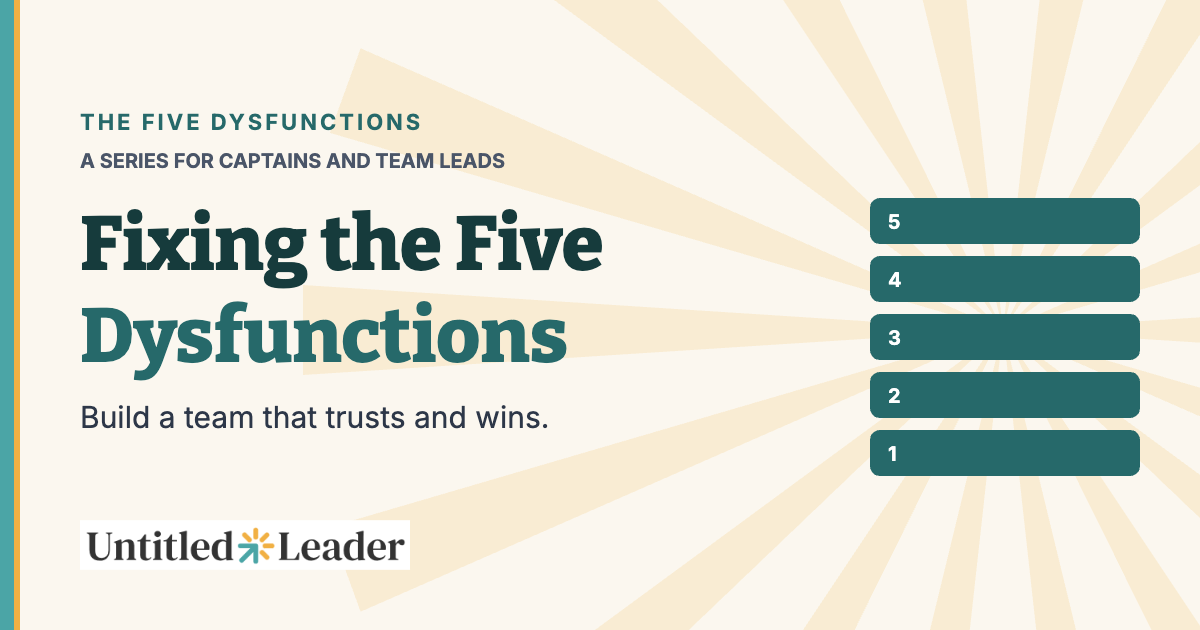
Quick answer: Patrick Lencioni’s The Five Dysfunctions of a Team explains why talented teams fail: they lack trust, avoid conflict, don’t truly commit, dodge accountability and lose sight of team results. Each problem builds on the one below it. Fixing the Five Dysfunctions is our five-part series showing captains and new team leads how to spot each one and fix it. Jump to the team check.
Why Lencioni, and why now
Lencioni wrote the book as a story about a struggling leadership team, then laid out the model behind it. It became one of the most widely read team books ever, because the problems are so familiar: polite meetings, hidden resentments, decisions nobody follows and people protecting their own stats. Those same problems show up on sports teams, student groups and new work teams. Read more on our Patrick Lencioni expert page.
How the five dysfunctions connect
We describe the model in our own words. Each dysfunction makes the next one more likely:
- Absence of trust: people won’t admit mistakes or weaknesses.
- Fear of conflict: without trust, people avoid honest debate.
- Lack of commitment: without debate, people don’t really buy into decisions.
- Avoiding accountability: without commitment, nobody wants to call each other out.
- Ignoring results: without accountability, people put their own status ahead of the team’s goals.
Flip it around and you get a picture of a healthy team: teammates who trust each other, argue productively about ideas, commit to clear decisions, hold each other to standards and focus on team results.
How to use this series
- Take the quick team check below to see where your team is weakest.
- Start with trust, even if your biggest problem seems higher up. Lencioni’s point is that everything rests on it.
- Read one post a week and run its exercise with your team.
Try this
A five-minute team check. These are our own statements, not Lencioni’s official assessment. Rate each from 1 (rarely true) to 5 (almost always true), on your own or anonymously as a team.
- People on our team admit mistakes without being afraid of how others will react.
- We disagree openly about ideas, and nobody takes it personally.
- When we make a decision, everyone knows what it is and acts on it, even if they argued against it.
- Teammates call each other out, kindly, when someone isn’t meeting our standards.
- People care more about the team’s results than their own stats or credit.
Your lowest score shows where to start. Low across the board? Start with trust.
Say this
“We’re talented enough. What’s holding us back is how we work together, and that’s something we can fix.”
Talk about it
- Which of the five dysfunctions sounds most like our team right now?
- What would change if we trusted each other more?
- What does a healthy version of our team look like?
As an Amazon Associate, Untitled Leader earns from qualifying purchases. Some other links here are affiliate or referral links. They cost you nothing extra, and we only recommend what fits.
Go deeper
The Five Dysfunctions of a Team
The fable reads in an evening, and the model at the end is the clearest guide to team health there is.
Also by Lencioni: The Ideal Team Player, on the humble, hungry and smart teammates who make healthy teams possible.
Fixing the Five Dysfunctions series
Keep going
- What the experts say about building trust
- Our other series: 21 Laws for Leaders Without a Title
- Free printable: Get the Five Dysfunctions Checklist (plus three more)
- Patrick Lencioni in our Expert Library
- Leading a team? Get the free First 30 Days starter kit
Leading a team?
Get the words for your next team conversation.
Free scripts and ten-minute exercises for new team leads, captains and student leaders.